Left Behind
I returned, and kept returning, until the wrecks began to read as a single accumulating archive rather than separate incidents
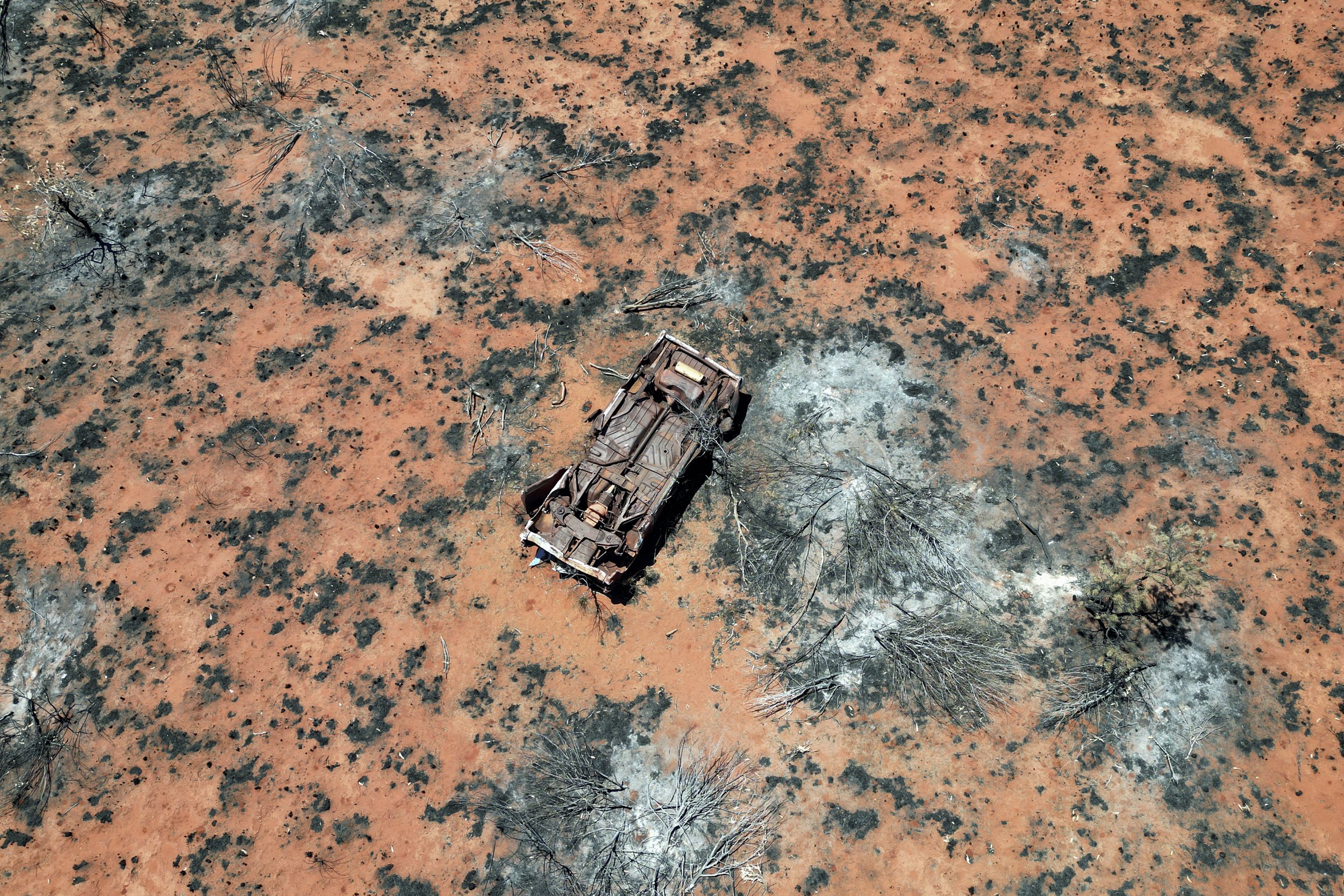
Left behind
Australia , 2025
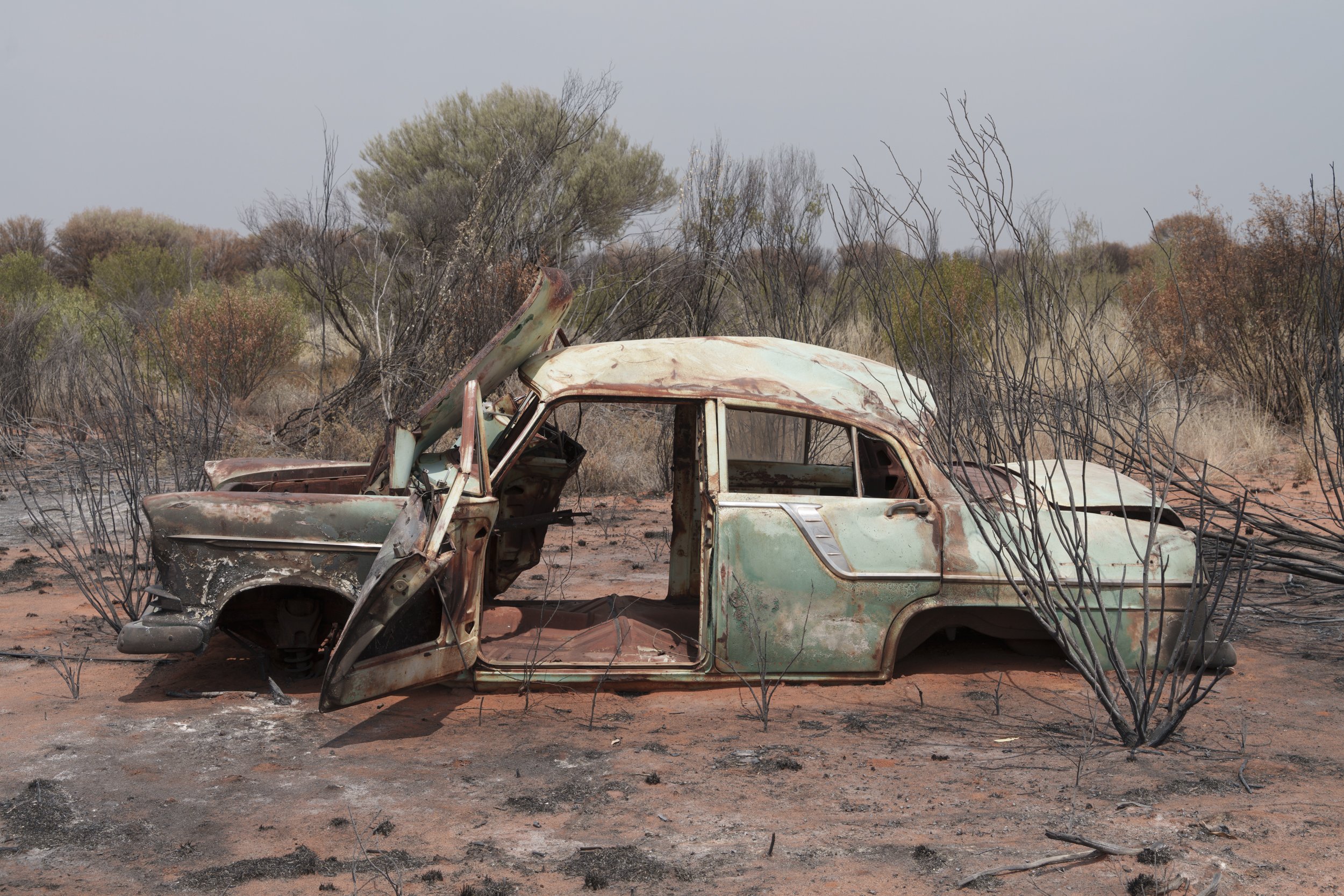
Left Behind is a body of work made in the Australian outback, examining what a landscape carries when its people have been pushed out of the frame.
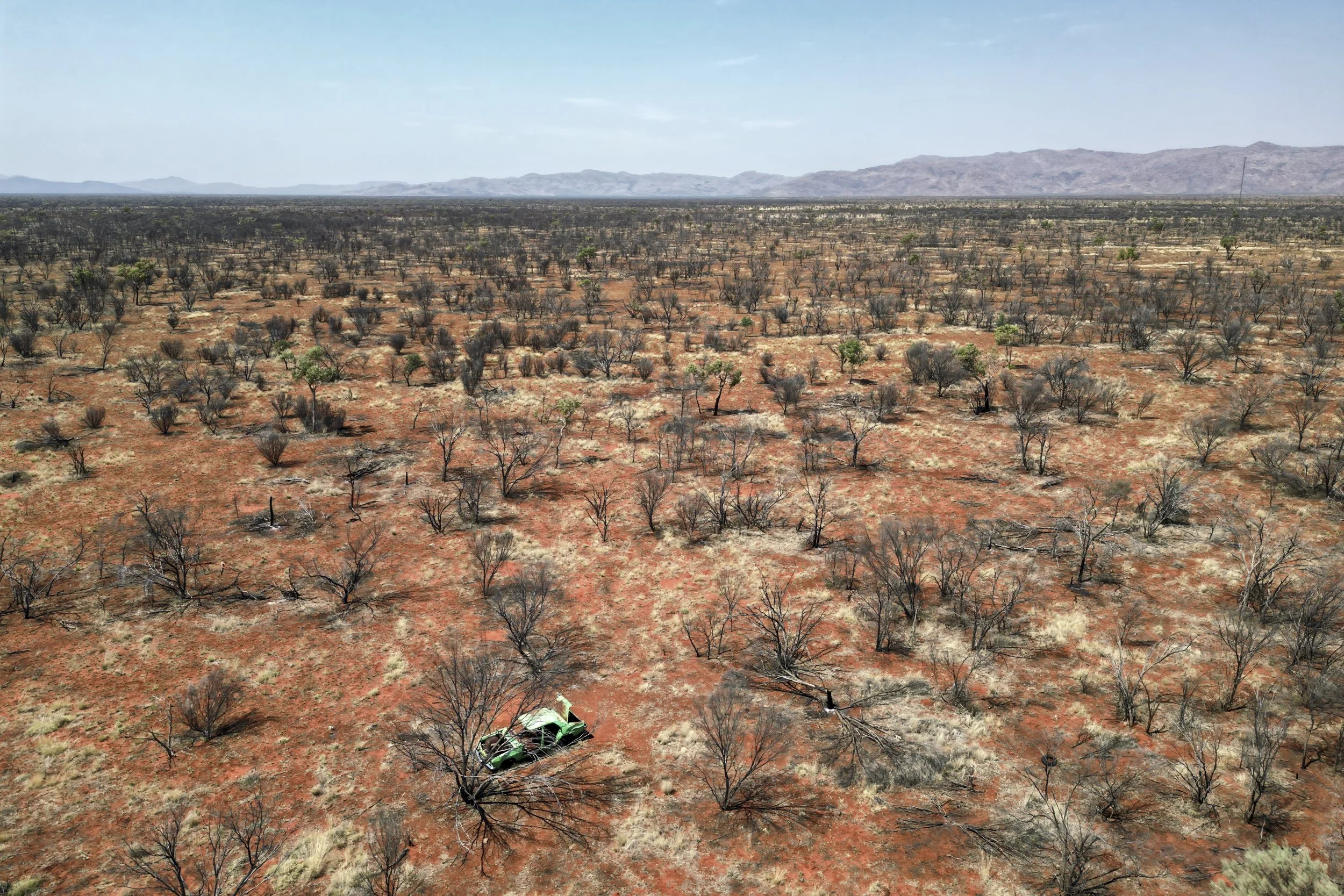
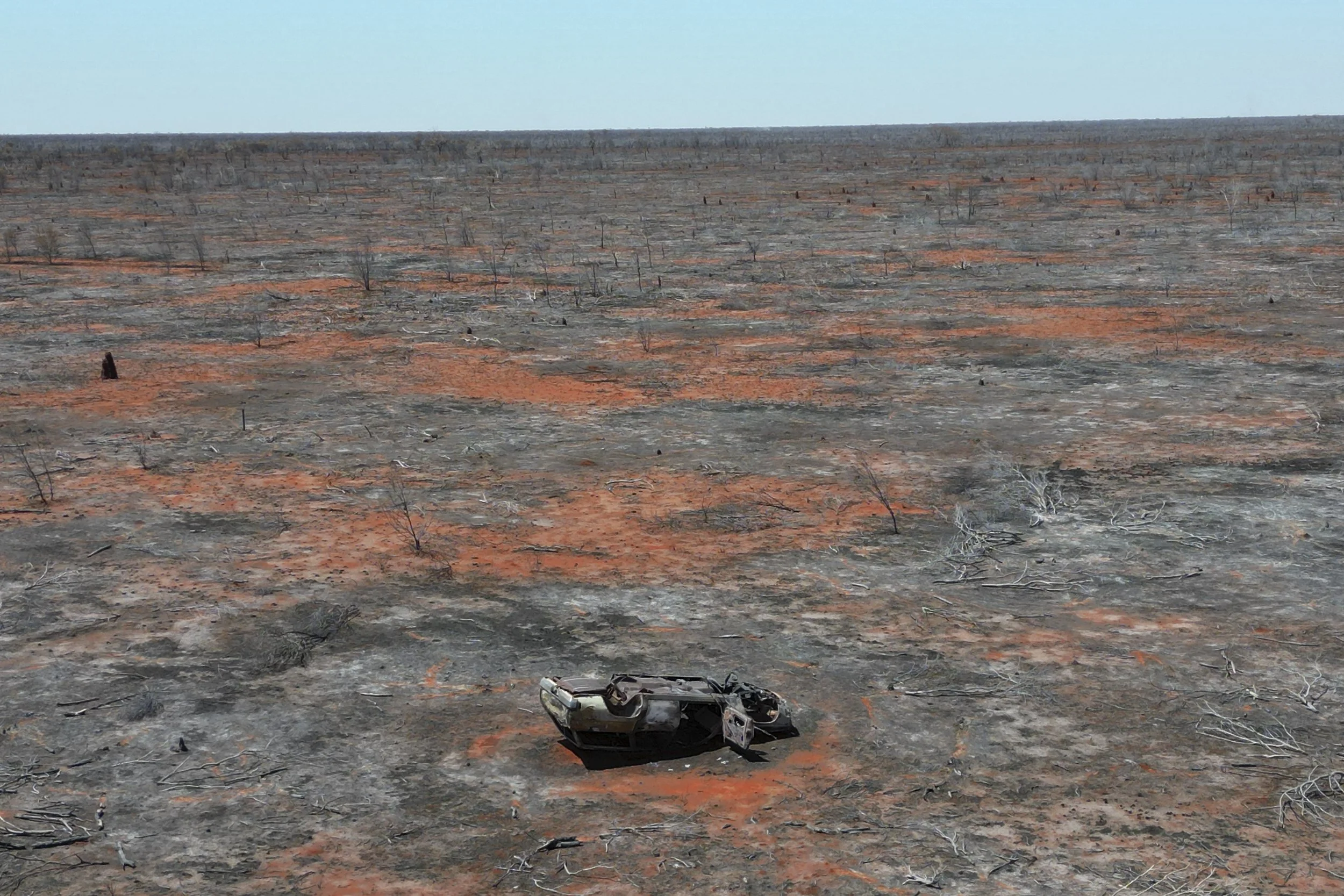
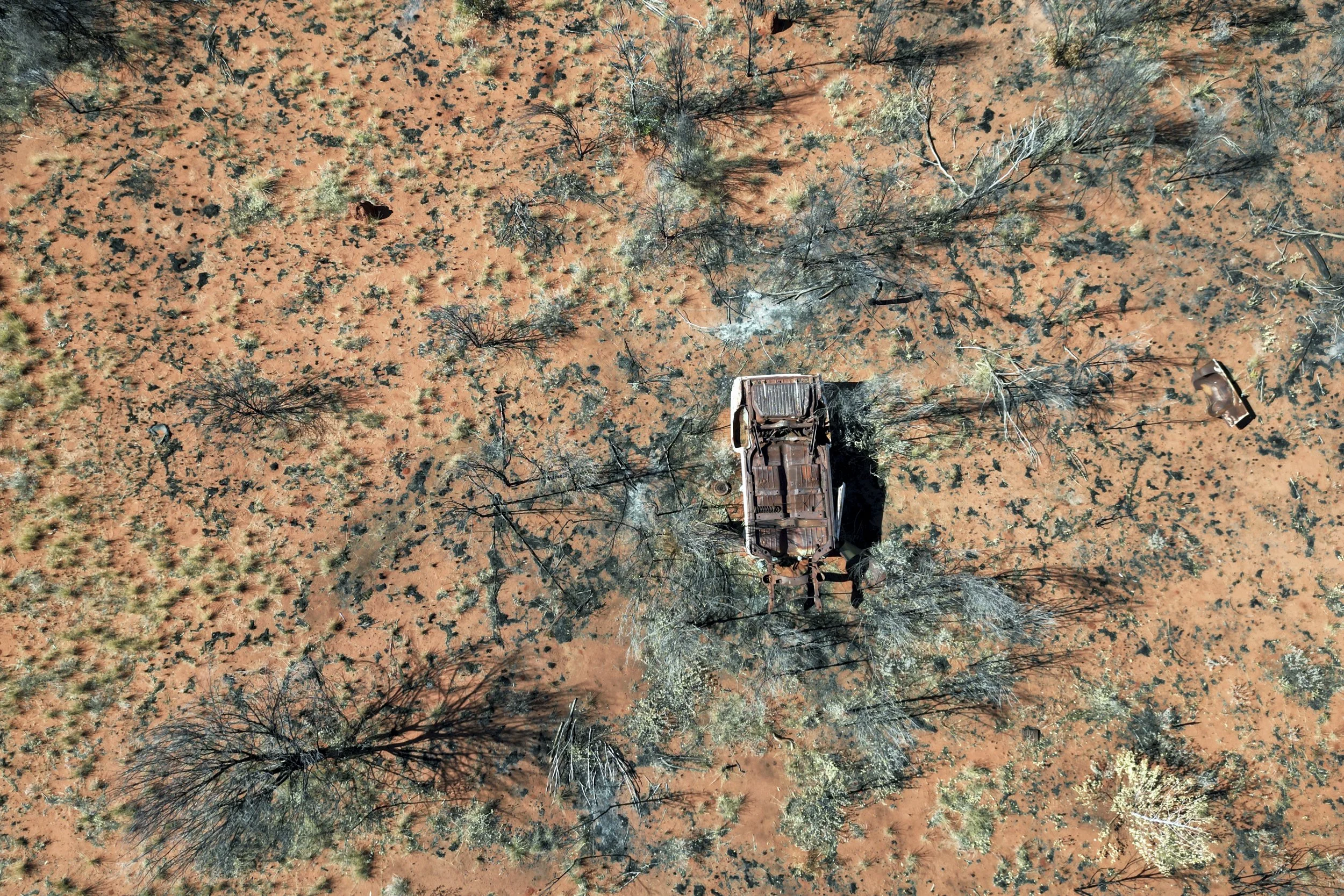
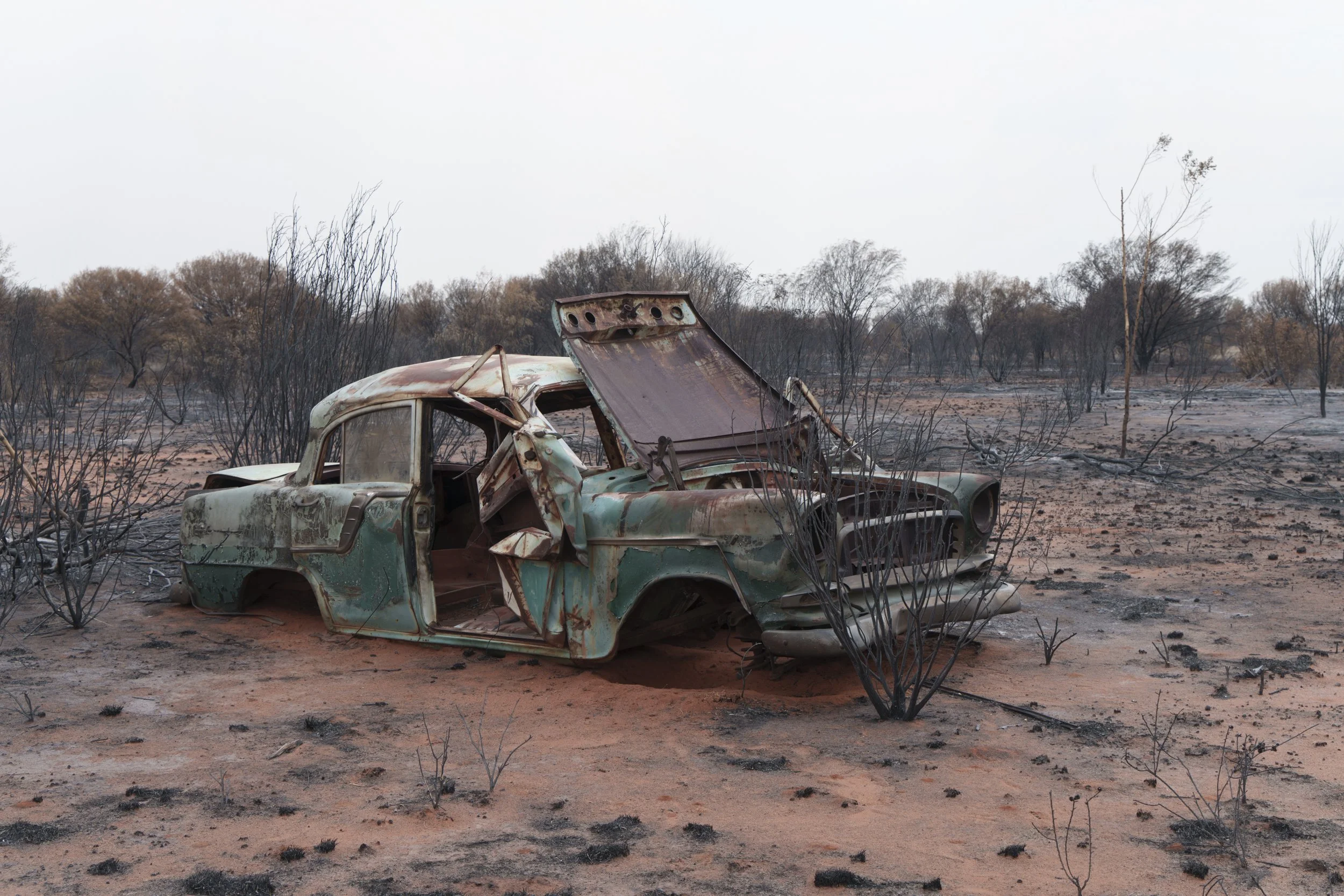
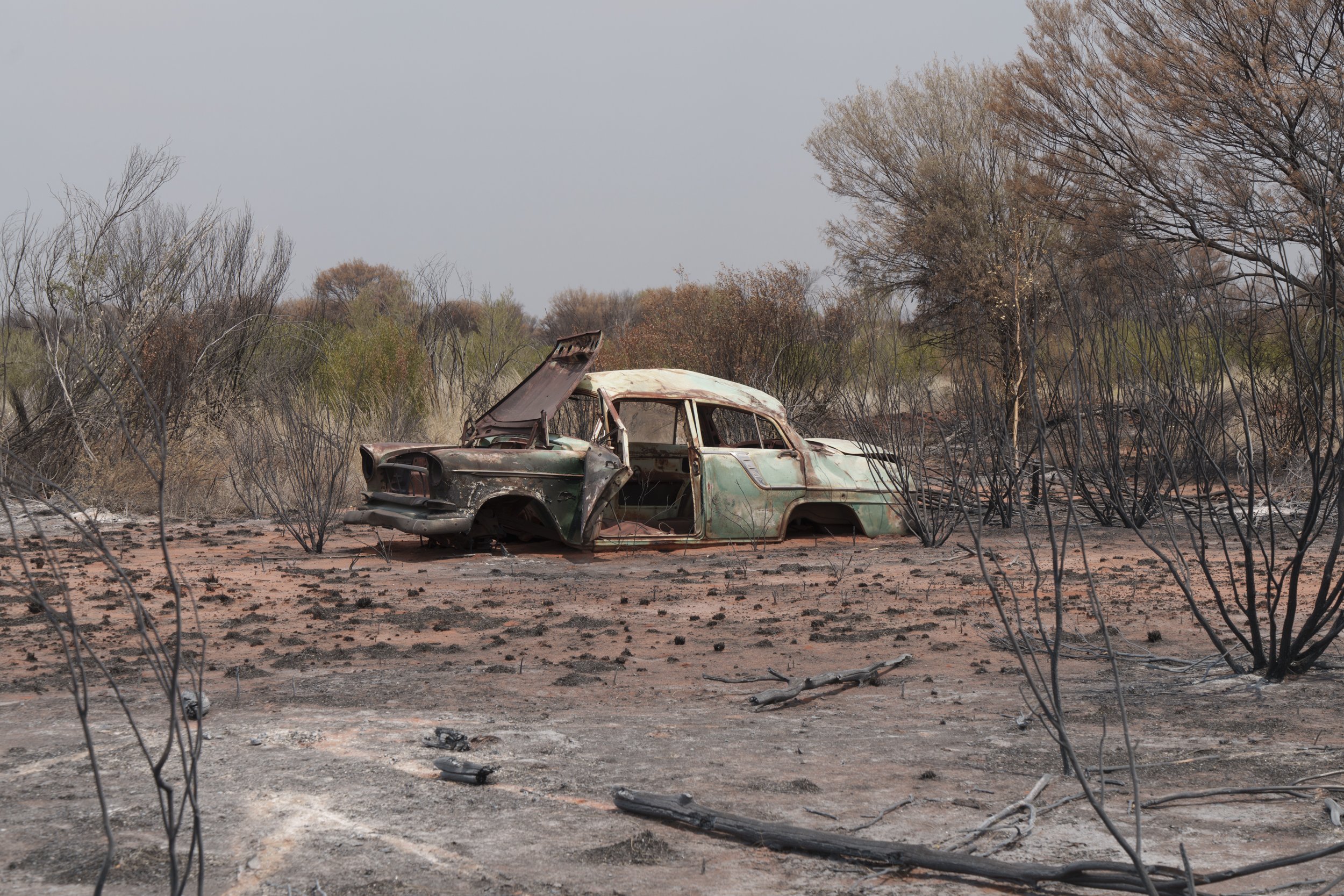
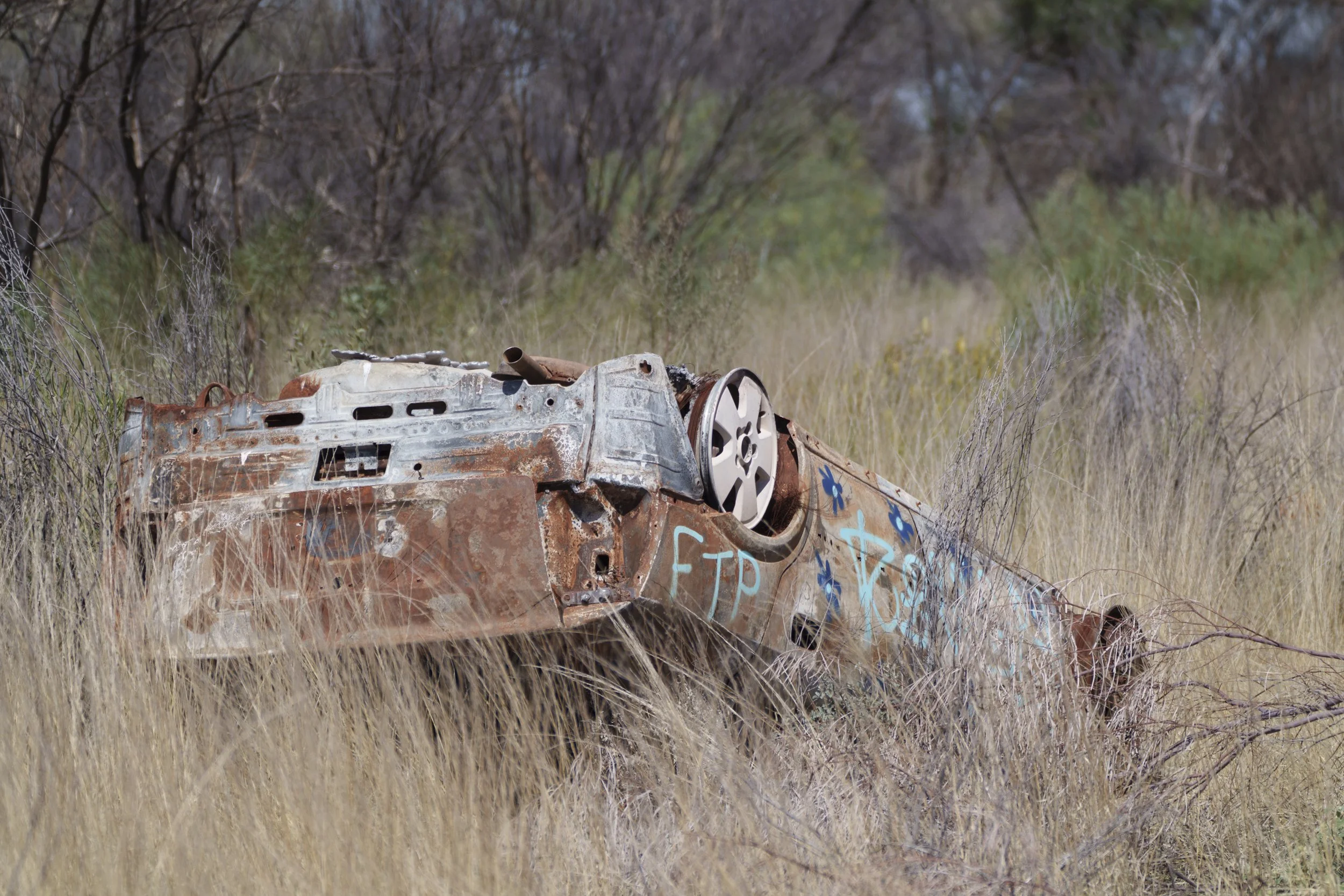
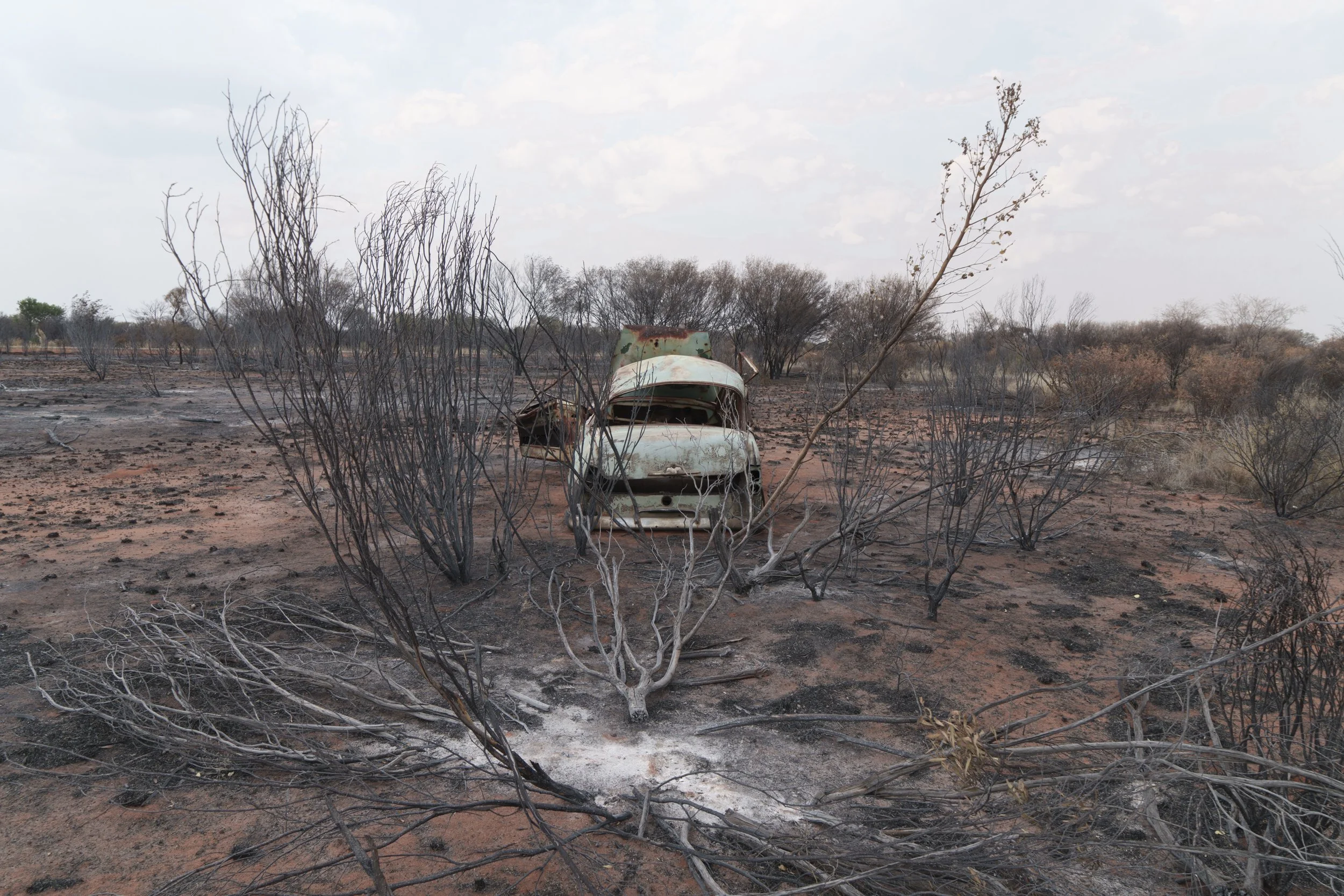
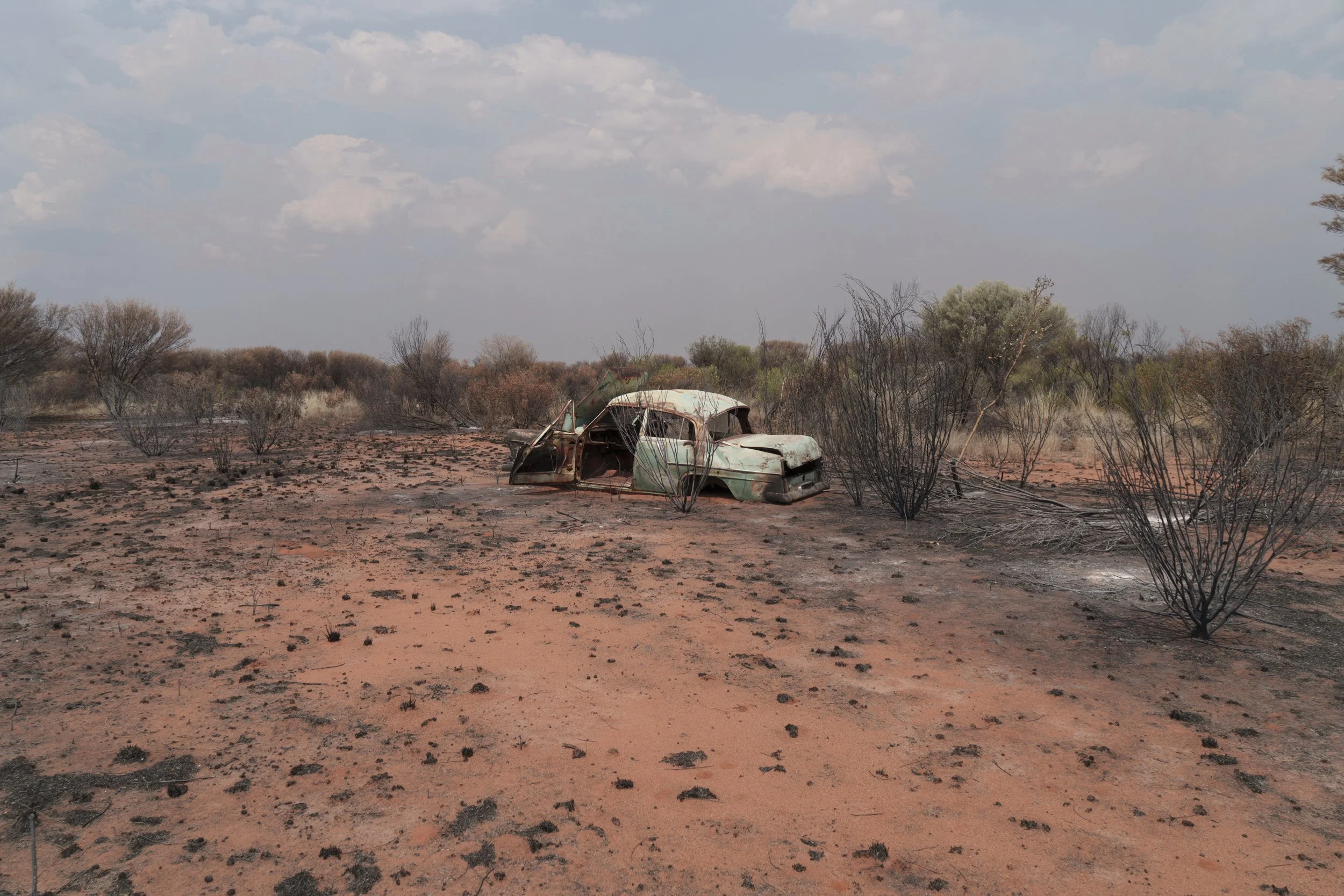
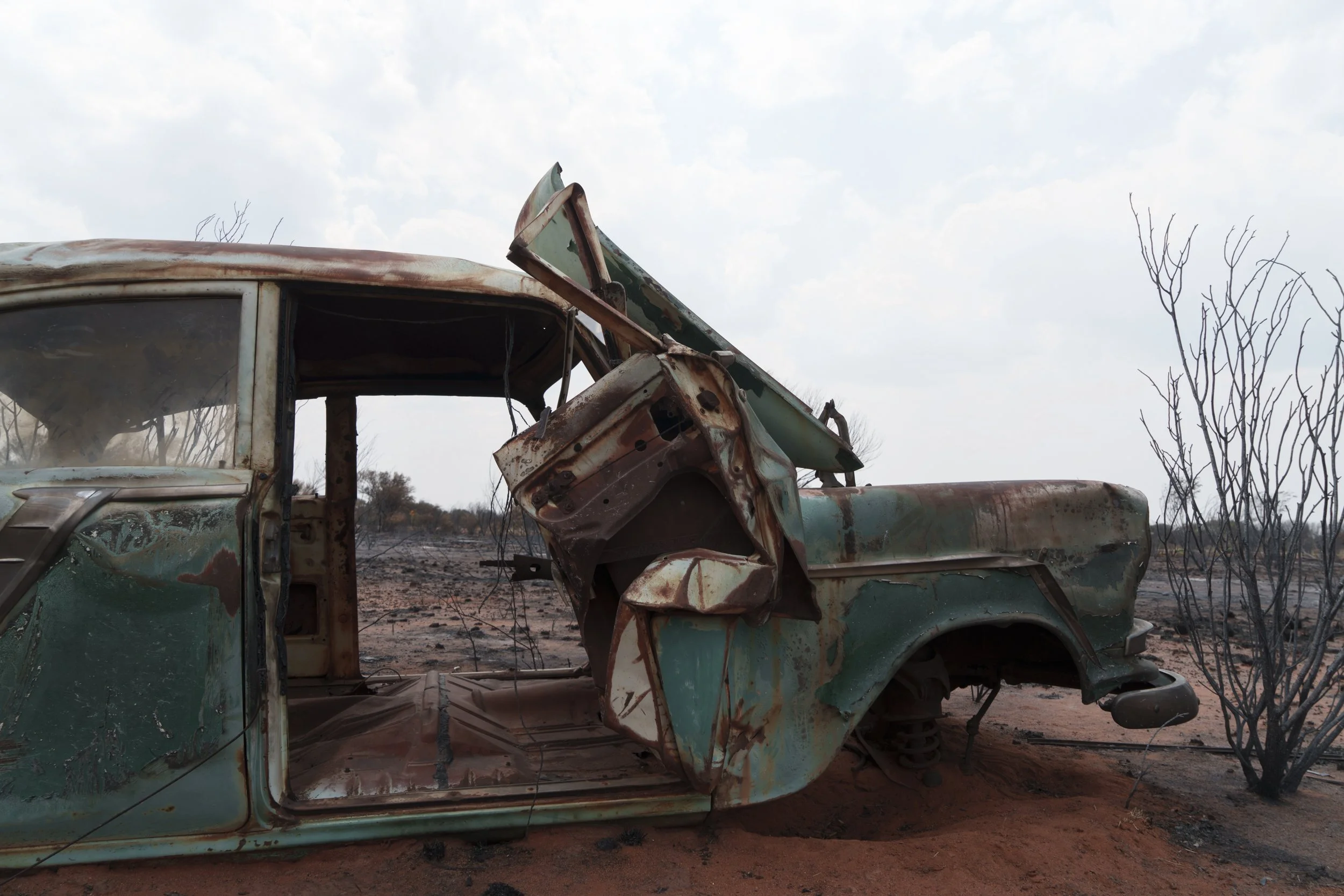
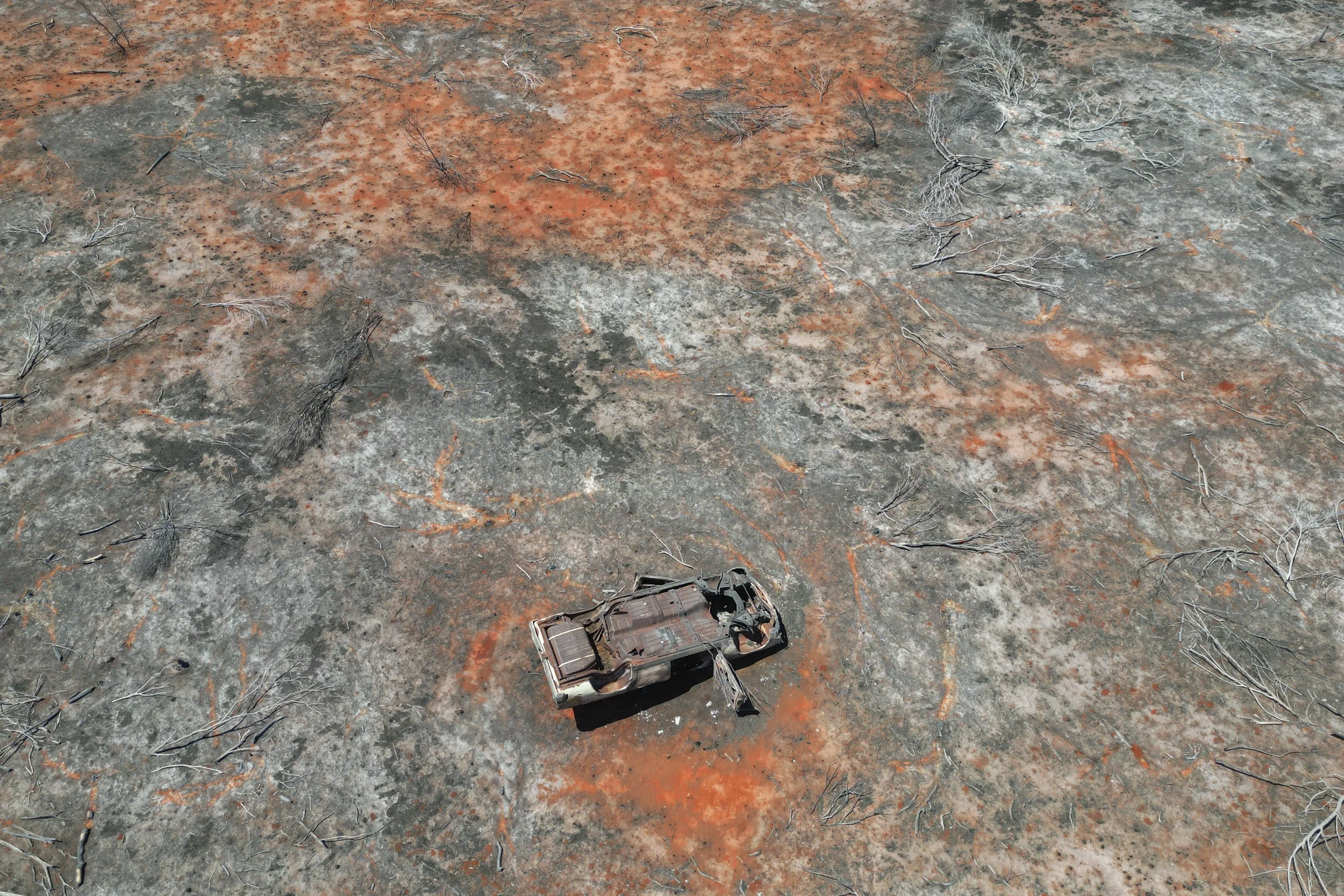
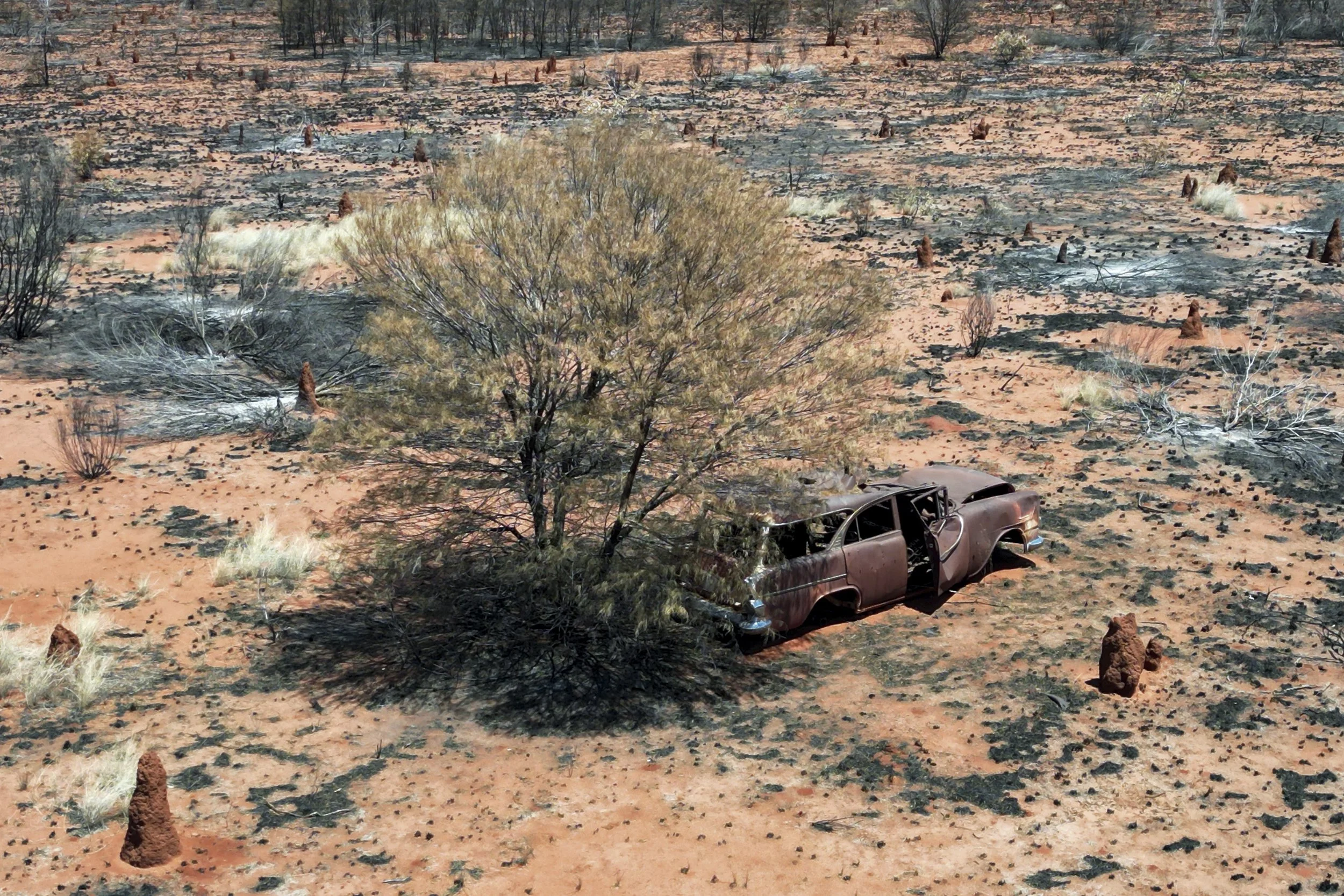
The series consists of photographs of car wrecks — vehicles set on fire and abandoned along remote roads, slowly returning to the red soil they rest on. I came across the first one almost by chance and could not move past it. The longer I looked, the less I saw a wreck and the more I saw a marker: of a route used up, a community no longer counted on, an economy that arrived from elsewhere and left its remains behind.
I returned, and kept returning, until the wrecks began to read as a single accumulating archive rather than separate incidents.
These objects exist within the long aftermath of Aboriginal dispossession. Bought second-hand, driven until they break, then abandoned or burned, the vehicles carry traces of both necessity and erasure. Their presence in the landscape speaks to a much larger history of movement, ownership and belonging — in a country where all three have been contested for centuries.
I photograph the wrecks the way one photographs a monument: at a measured distance, frontally, with the same weight given to each. There are no people in these images. The absence is the work. Rather than asking displaced bodies to become the proof of their own displacement, I allow the landscape to testify, and the object to remain.
Formally, Left Behind moves between two visual languages. There is the cool grammar of the document — repetition, distance, equal attention — and there is the elegiac landscape: low horizons, red earth, a single charred form marking time. At times the wreck becomes something closer to a tombstone than debris.
I am interested in the moment when those two languages occupy the same frame: when observation meets grief, and neither cancels the other out.
What I am after, finally, is a kind of evidence that does not depend on a body to confirm it. The wrecks are not metaphors for what was lost. They are what was left when the leaving was finished. They look, at first, like the residue of accidents.
They are the residue of a much older one.
Left Behind is the first chapter of a longer enquiry into objects as witnesses, and into landscapes asked to carry what no one is permitted to say out loud.