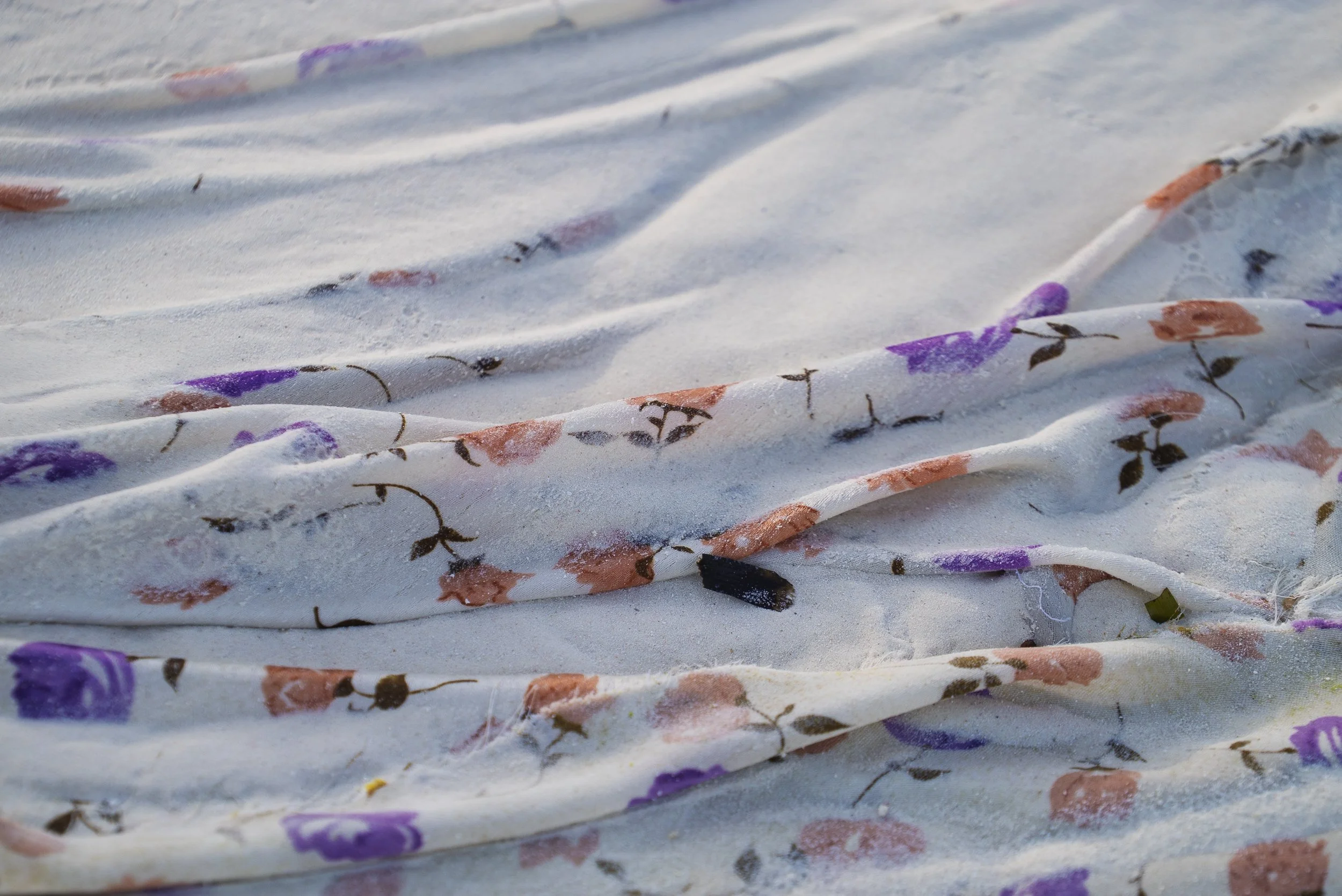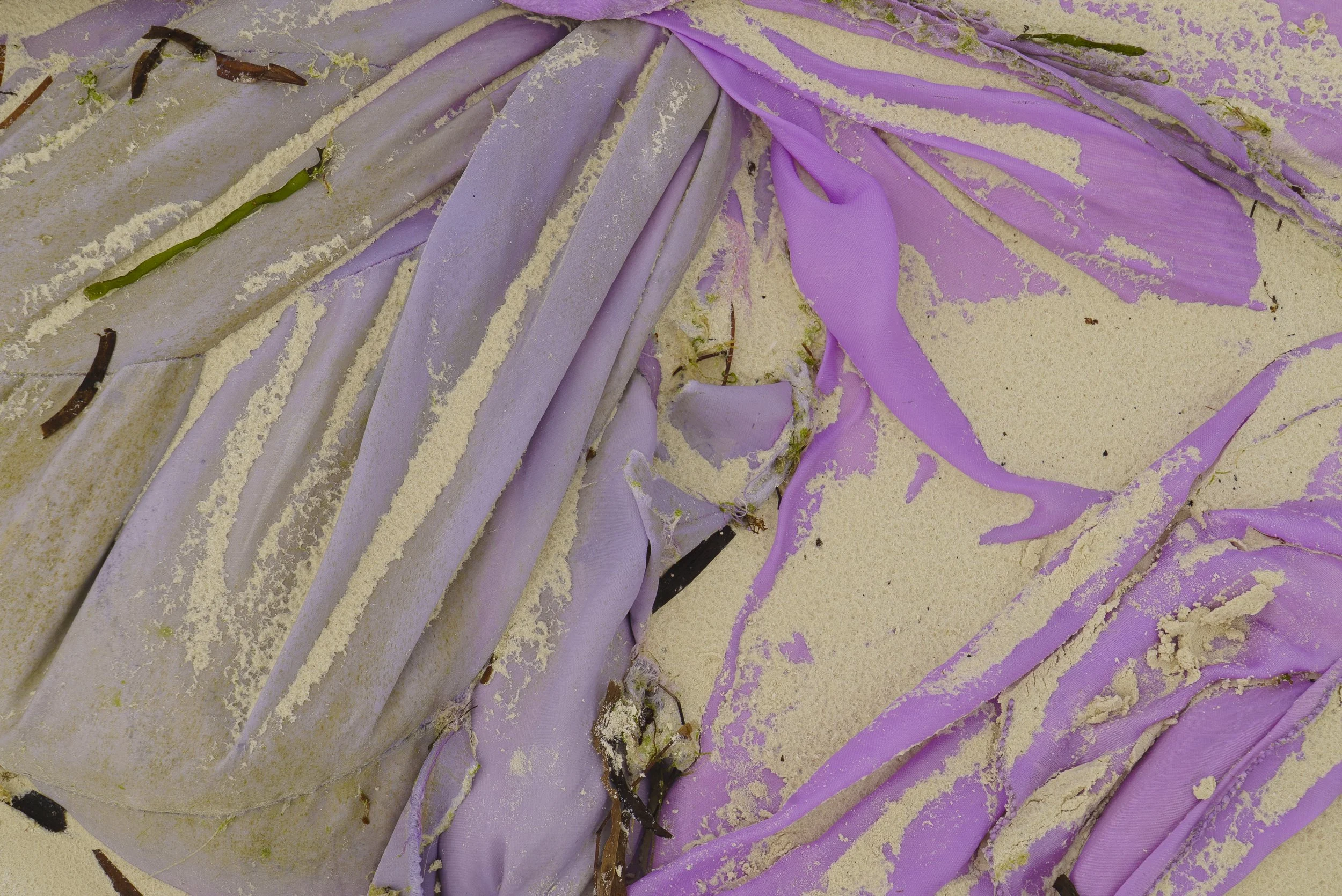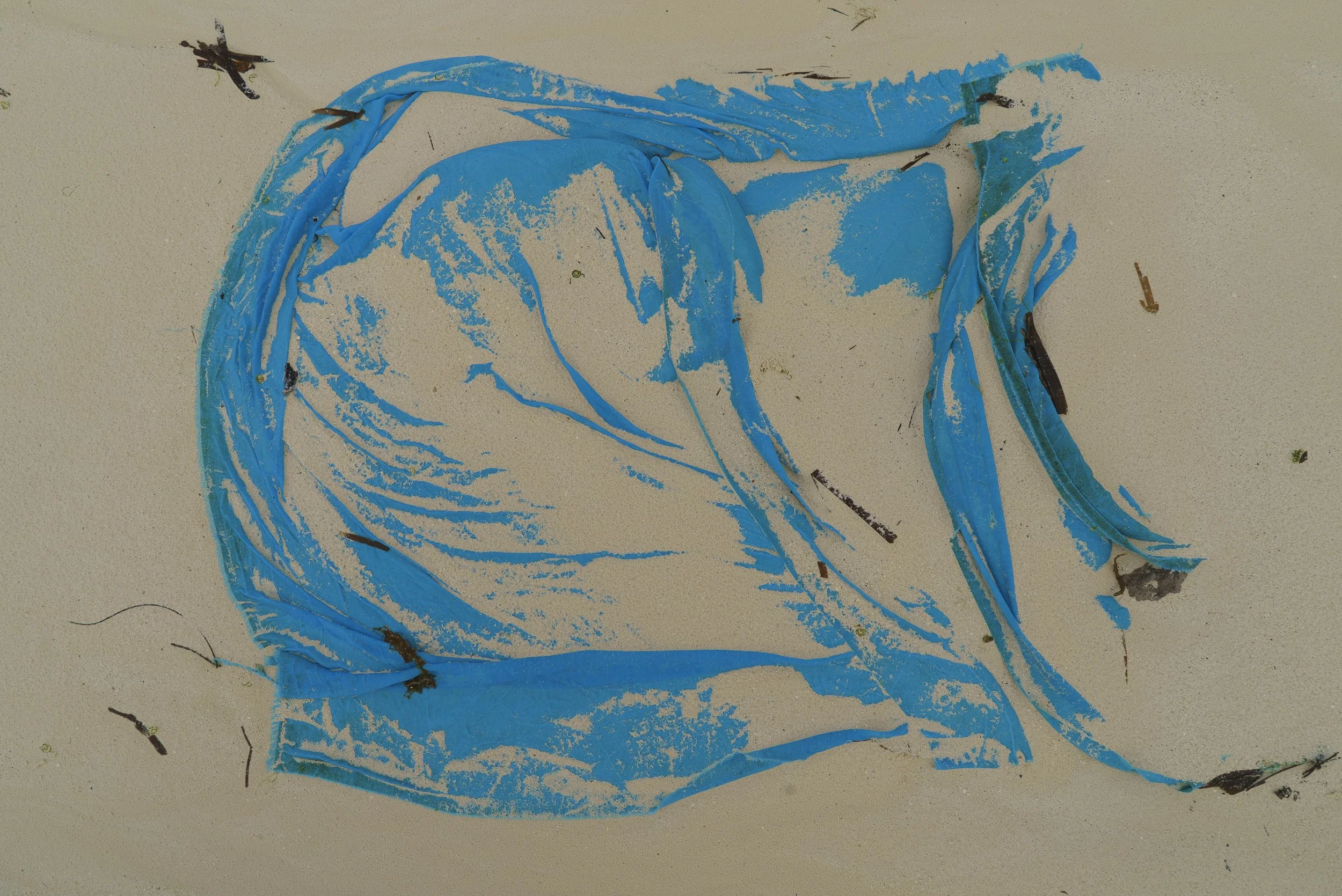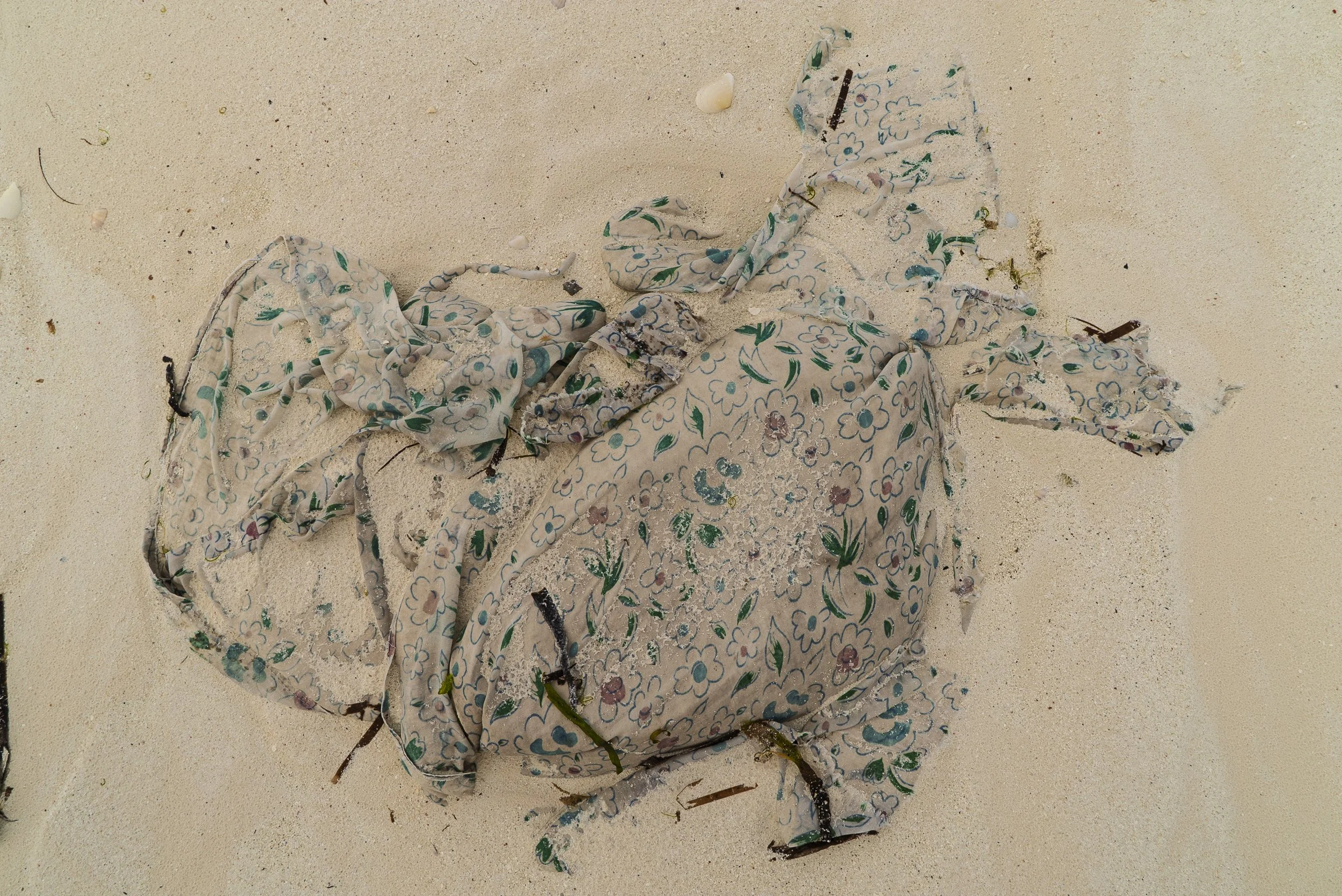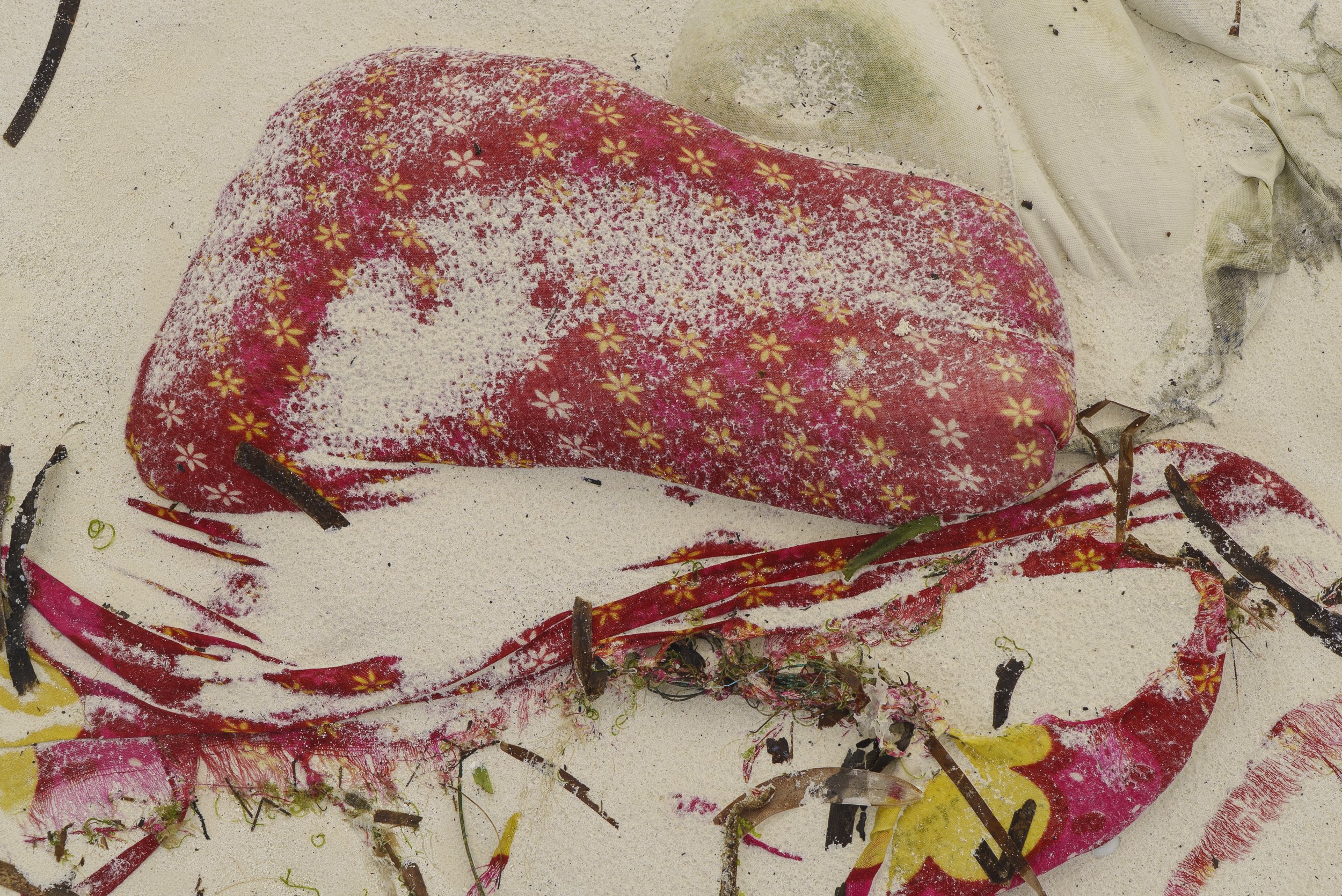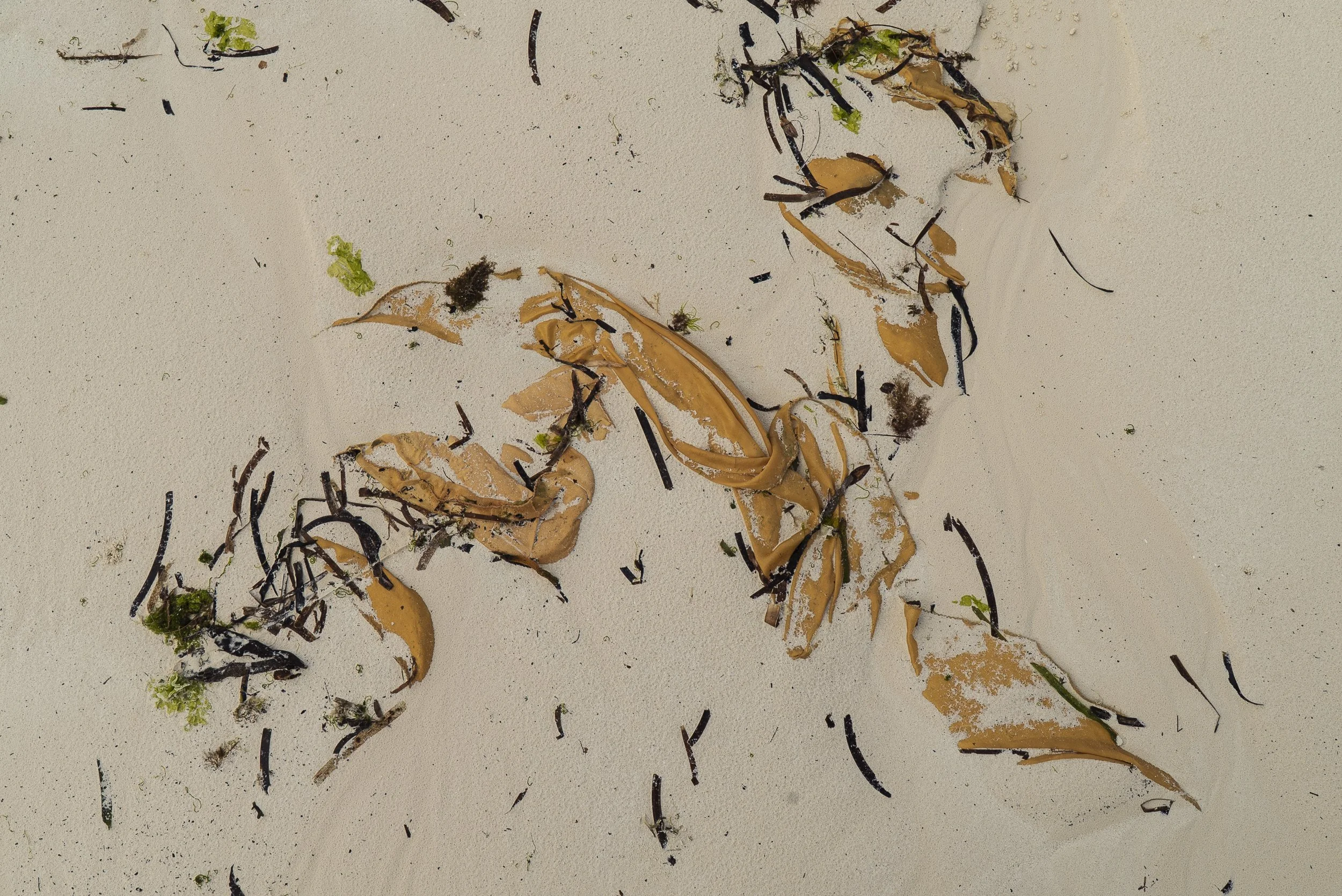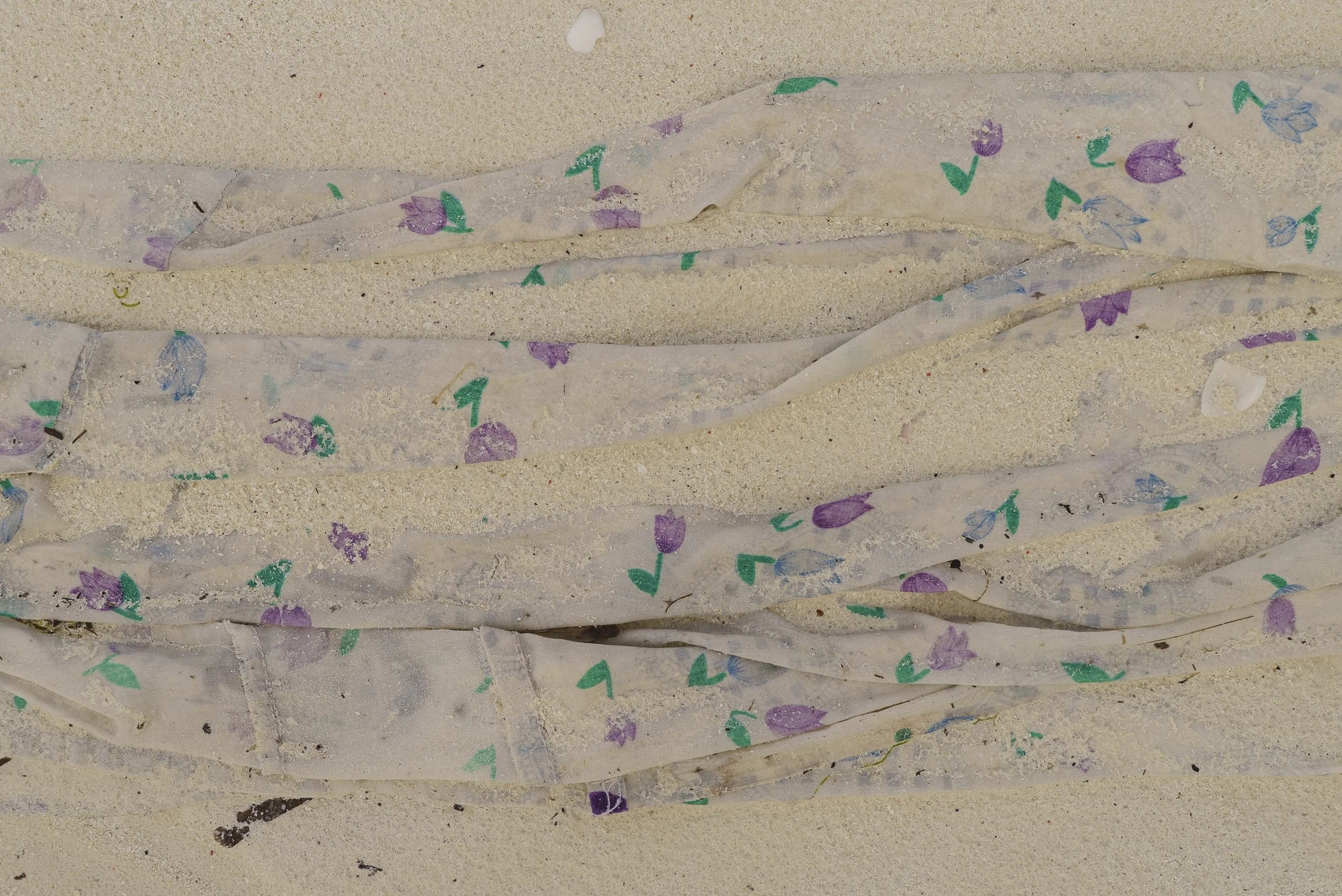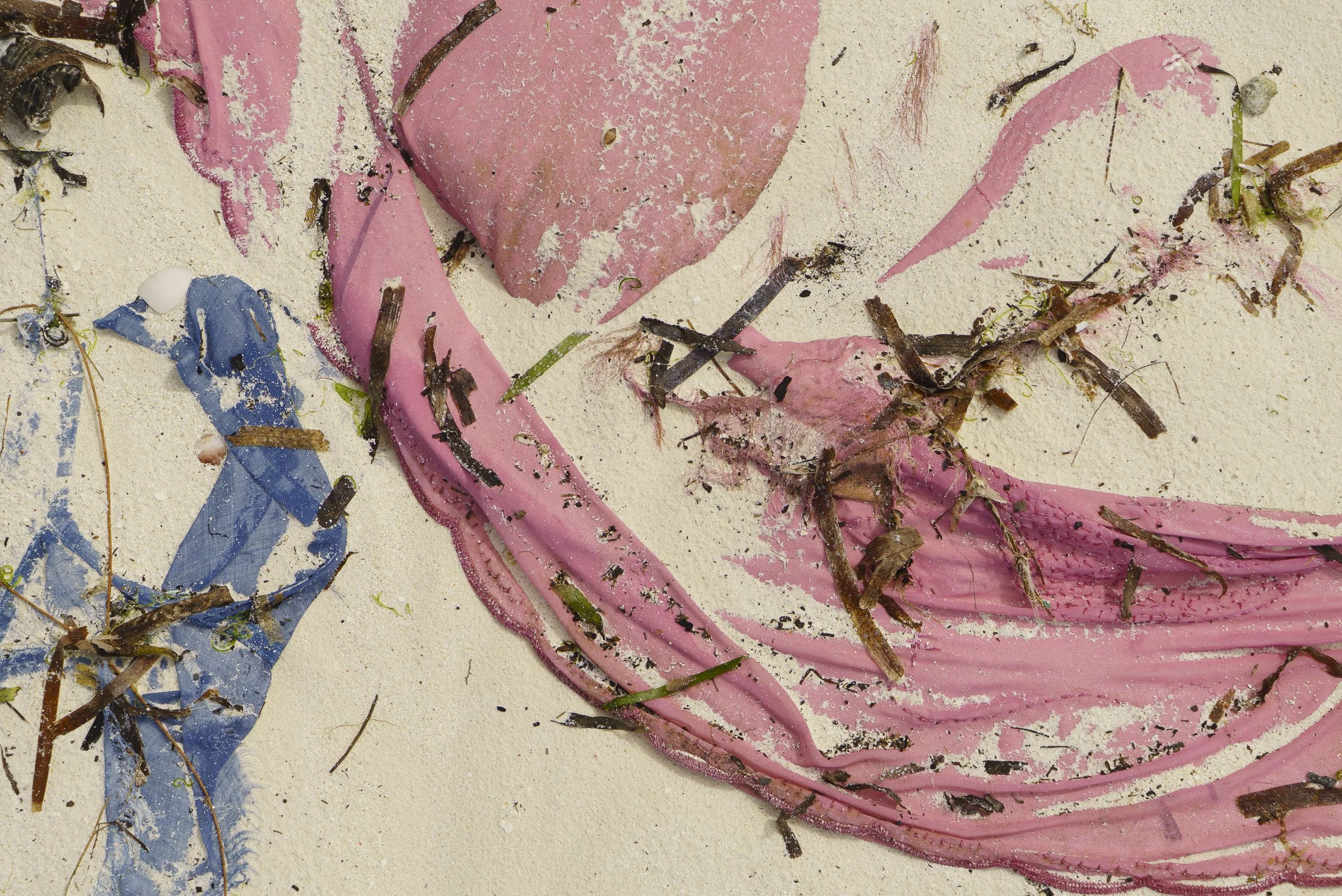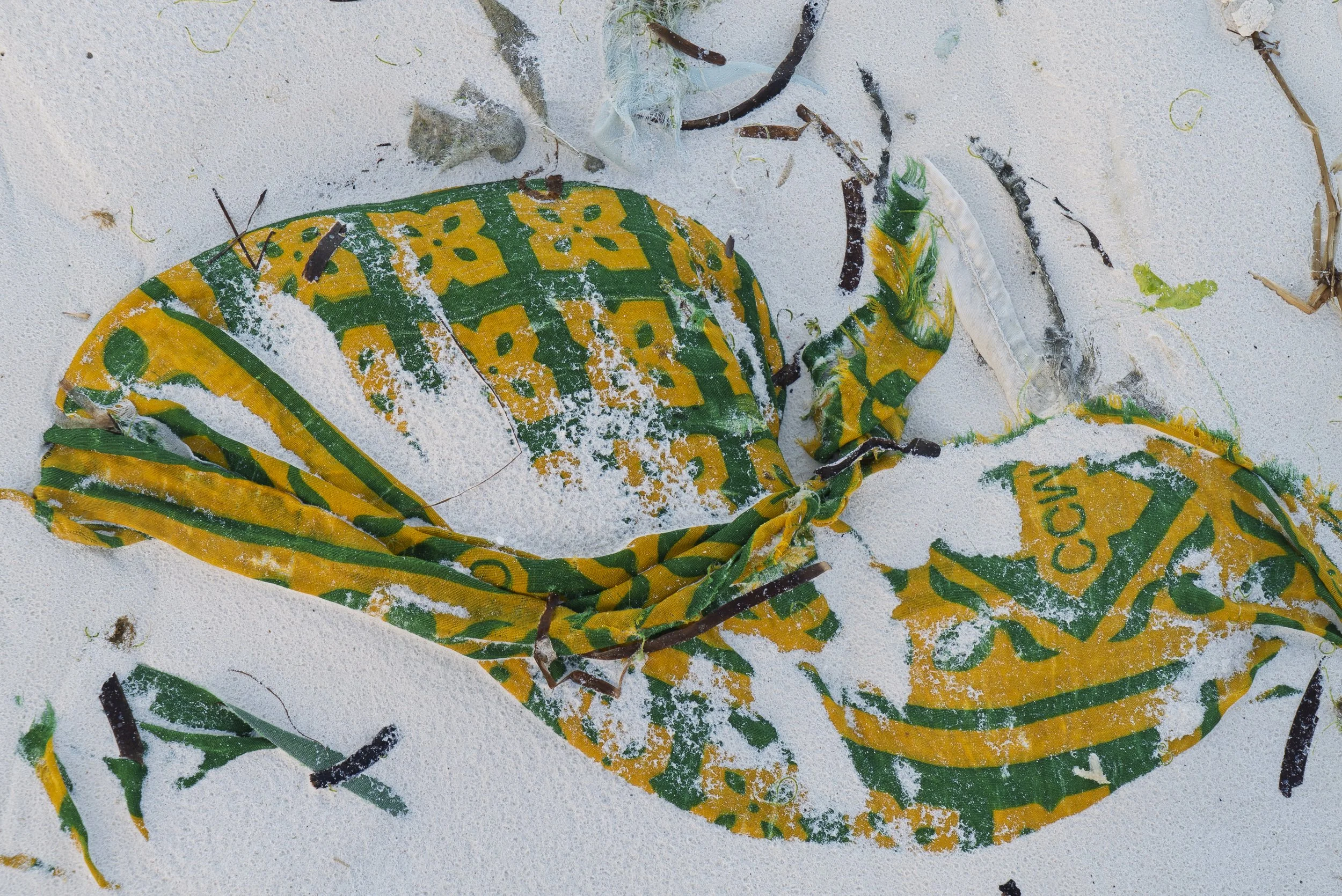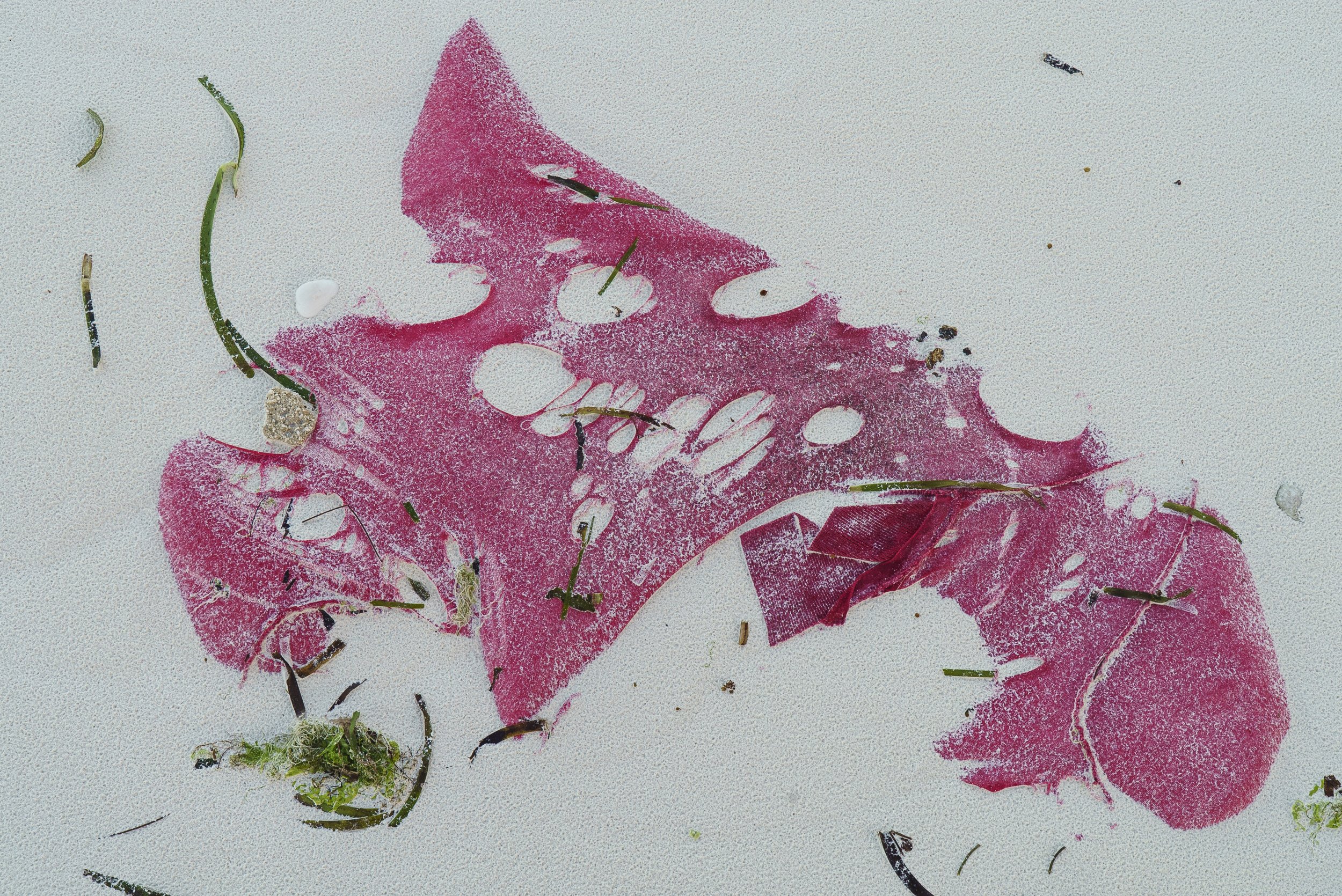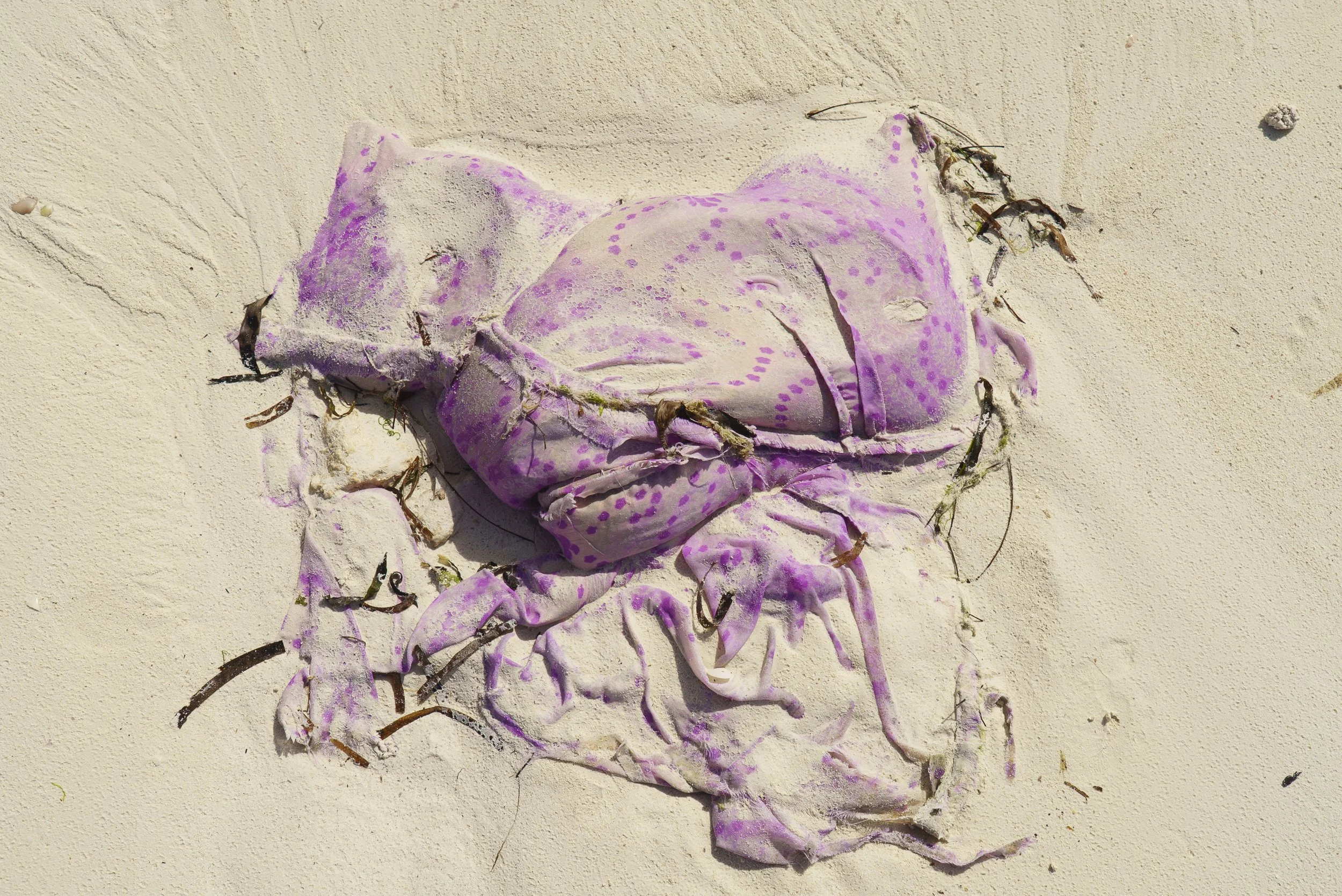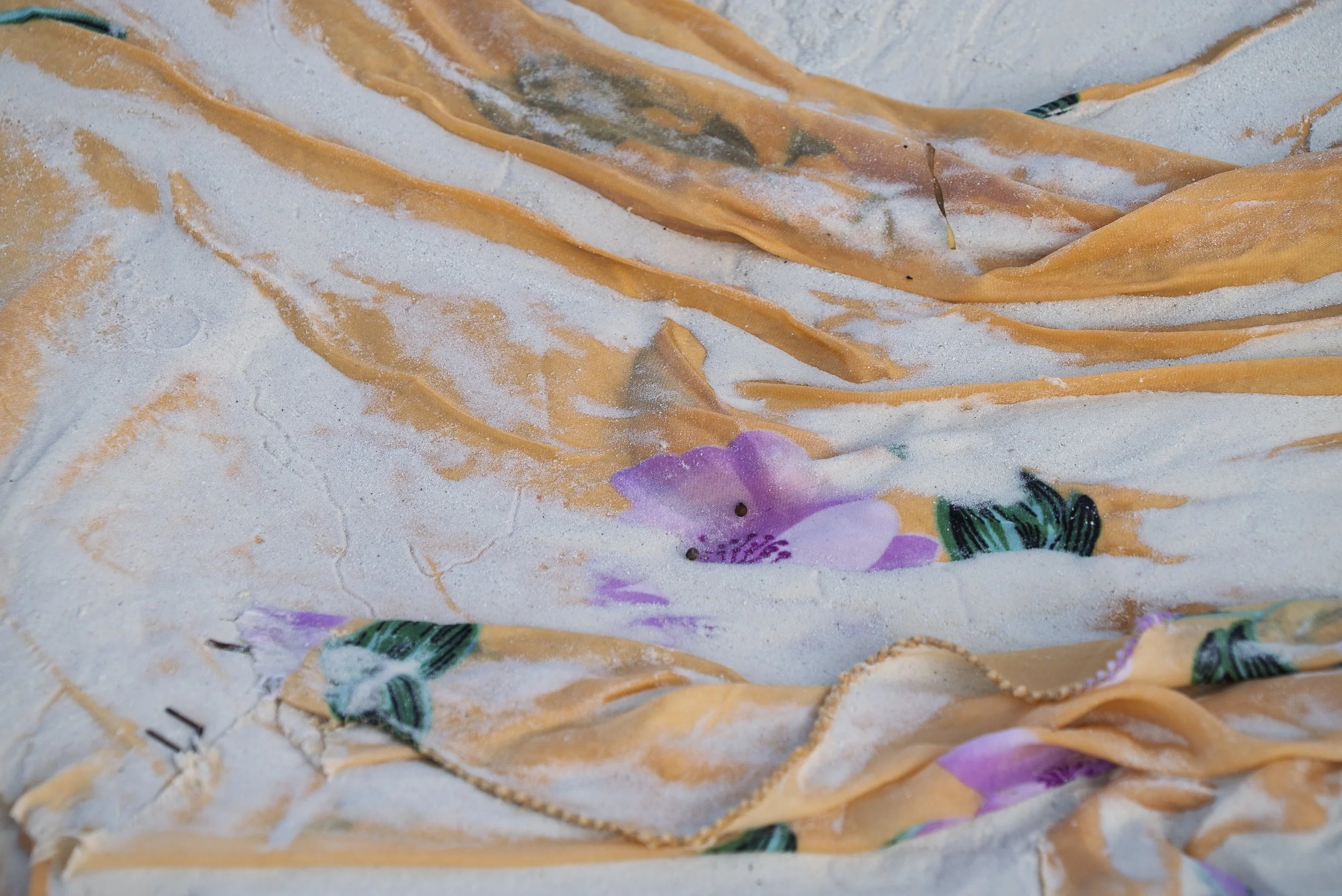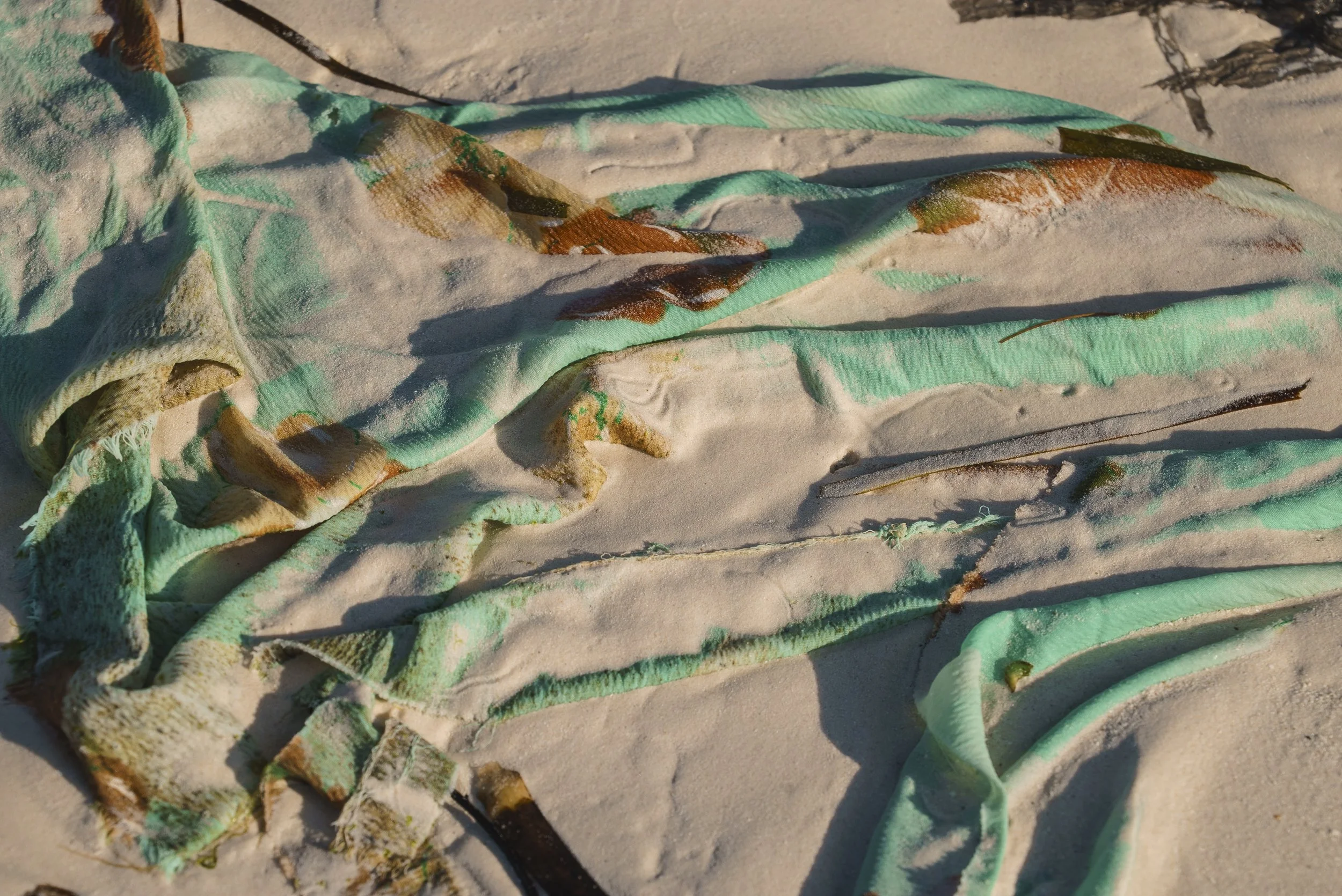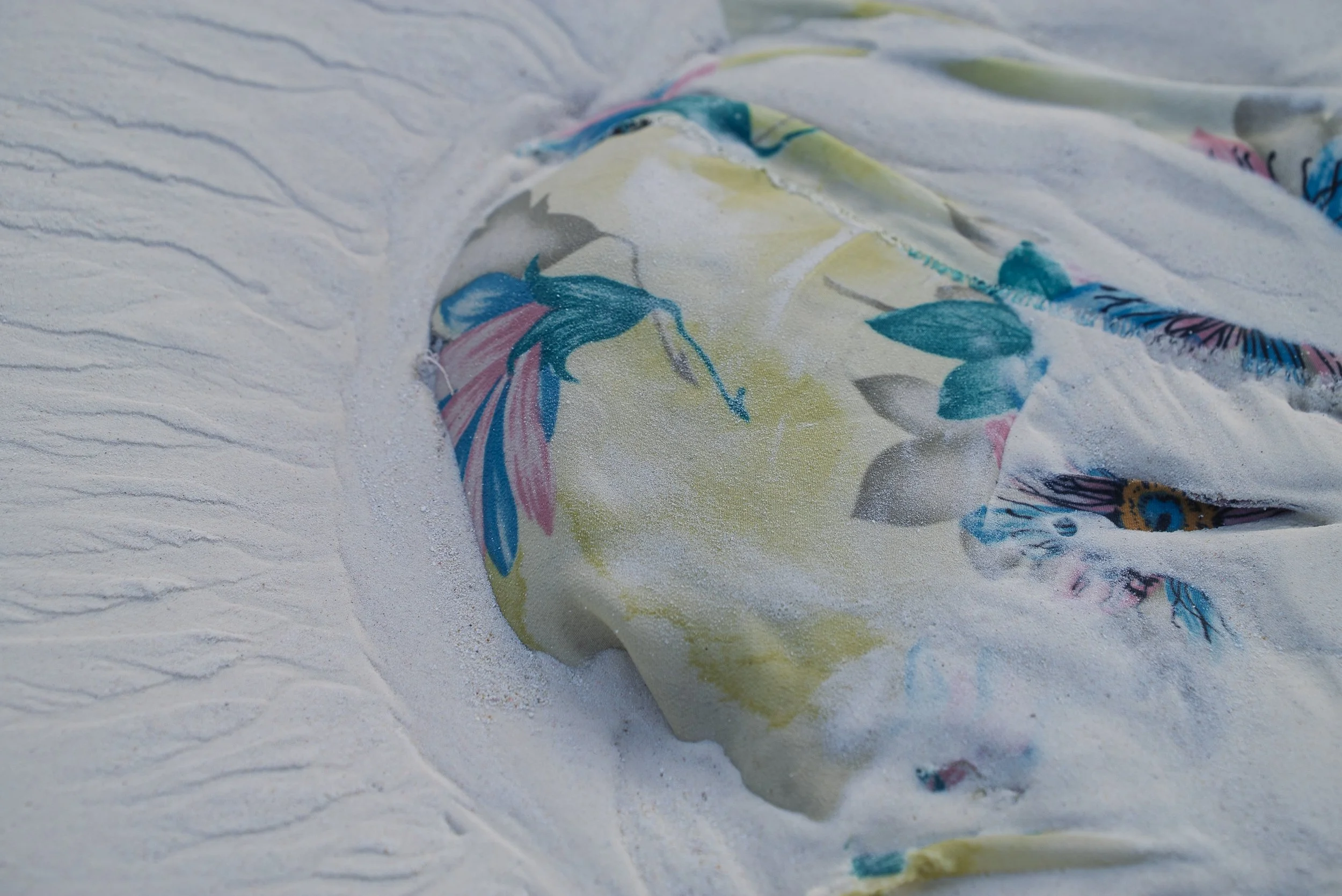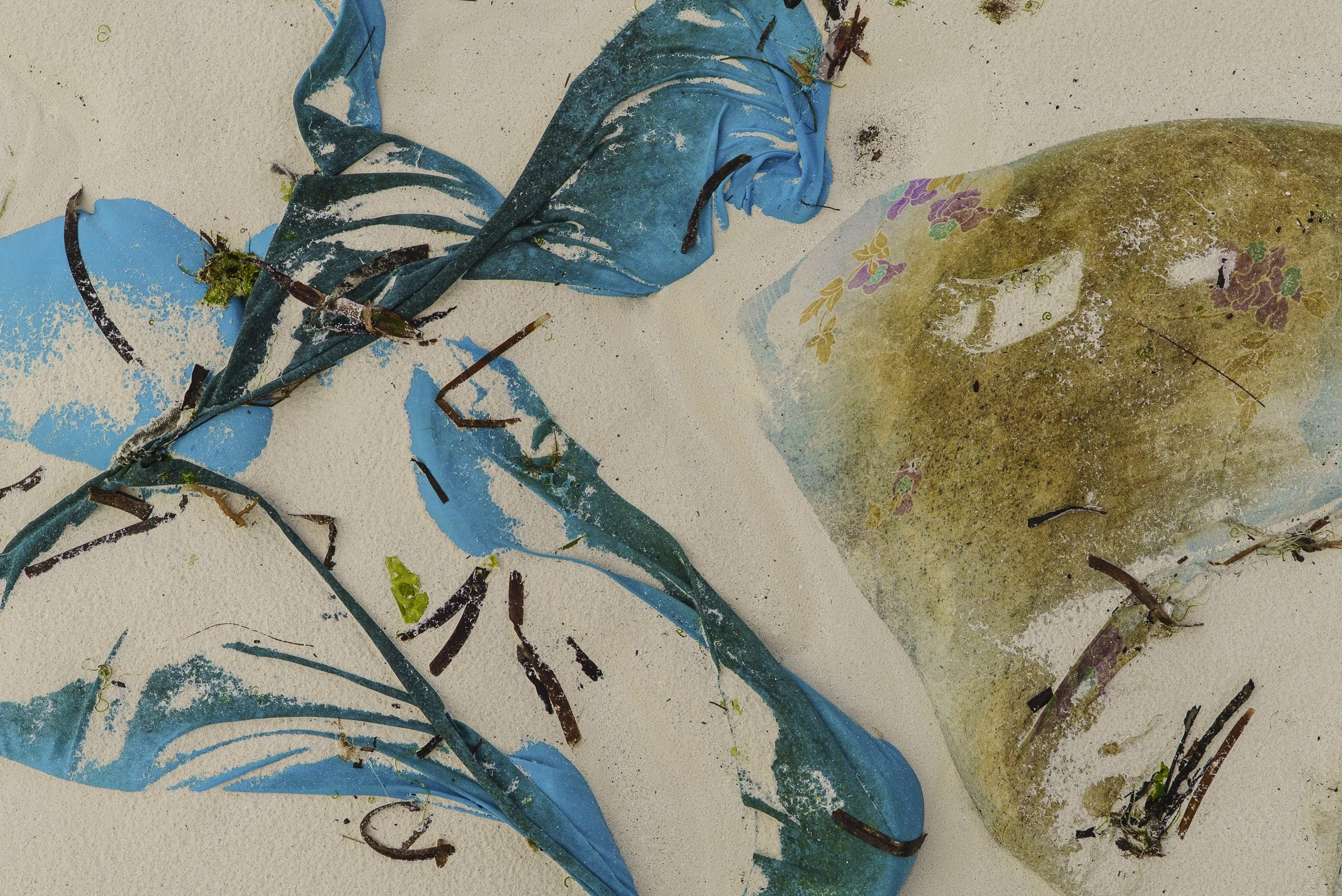
Some say they are left by the sea after ritual, as an offering. Others say they are torn loose, blown free, or washed in from villages further along the coast.
SEA RAGS
Zanzibar, Tanzania · 2015
Along the beaches of Zanzibar, cloth lies scattered for kilometres — kangas among it, but not only kangas. Half-buried, folded by waves, bleached by sun and salt. Flowers, dots and printed proverbs slowly fading into sand.
To walk here is to walk past a half-open archive.
Among these fabrics are kangas. A kanga is not ordinary cloth. For generations, women along the East African coast have used them to communicate without speaking aloud — through colour, pattern, and the Swahili proverb printed along the edge. Kangas accompany moments of birth, marriage, sickness and grief. I learned of them being used in mourning and funeral rituals too: cloth remaining after the body is gone, sometimes continuing its life in the hands and prayers of other women.
How these cloths come to rest on the beach, no one seems to know for certain. Some say they are left by the sea after ritual, as an offering. Others say they are torn loose, blown free, or washed in from villages further along the coast. Still others speak of cloth deliberately set down when its wearer no longer wanted it.
Different stories circulate. None of them closes.
What remains is the cloth — and the question around it.
I photograph these cloths up close. Not as documents, not as finds, but the way one might photograph a garment left behind in an empty house: with attention to the fold, to the crease, to the way cloth seems to remember that it once held a body.
Some have kept their shape, as if someone had only just stood up. Others are almost back to the earth — tangled with seaweed, rope and shells, slowly dissolving into the shoreline.
The shore itself is a threshold. Neither land nor sea, neither home nor away. What rests here belongs to no clear category.
The cloths are still speaking, only in a language we do not entirely understand.
Sea Rags is about what remains, and about our impulse to give meaning to what we find. These cloths are traces, half-sentences, stories whose beginnings and endings I do not know.
Together they form an archive of absence.
Nothing has disappeared without leaving something behind.